From the earliest years, I’ve been trained to take care of the existing order, realizing that it is fragile, but irreplaceable. A middle child – fifth of eight children in twelve years -I was born to an emotionally-fragile family, precariously wobbly and needing support. Finances were not an issue – my father was a recognized surgeon – but unfortunately his fine surgical skills did not lead to sensitive parenting.
Although our family was emotionally dysfunctional, it was coherent. We got little support as individuals, but, at least for me, had a group identity. No helicopter parents here. We straggled our ways through childhood, identifying ourselves as ‘the Shaw Circus’. I think the elementary and junior high teachers that experienced us in sequence might have thought of us as a bit bumbly as well. “Oh dear (I hear them saying), here comes another one of the Shaw children. Sigh.” We wandered around, frequently without much supervision, figuring out where we had to be and how we had to get there. I later thought, when I had the reference, that we ‘growed like Topsie”. We had great latitude within very firm boundaries. We knew what the limits were and stayed within them (or got spanked in a very public way with a ruler).
In many ways, it turned out be ‘good-enough parenting”, however. My siblings each went their own direction: world-class bridge player; surgeon, Shakespeare scholar, artist, developmentalist, art historian, security systems specialist, and professional fly-fisherman. Do you notice how ‘hands-on’ most of these professions are? This is not an accident. We were trained to pay attention to, appreciate, and take care of, the physical world around us.
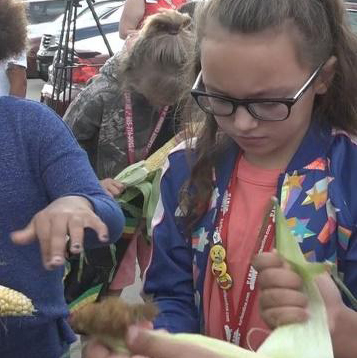
Despite the lack of individual emotional support, we functioned effectively as teams. Some of my favorite childhood memories are of our working together to accomplish family goals. We had teams to prepare meals and do dishes after dinner. My sister, Linda, and I, night after night, washed and dried the dishes while singing ninety-nine bottles of beer on the wall and Gloria in Excelsis. In the summer, I remember sitting on the back steps, both laughing and grimacing, as we shucked wormy corn for dinner, or cut the moldy parts off of the strawberries, saving the nice parts to put on ice cream for dessert.
We had a big yard that we cared for ourselves. We each had to pull a bushel basket of weeds before we could go to the neighborhood swimming pool. This was easy enough in early summer when the weeds were long and easy to pull out, but a challenge in the hot summer when the weeds were small and tenaciously clinging to the hard earth. I remember five of us cleaning the bugs off my father’s black Cadillac with big soapy sponges. Back in those days the bugs were HUGE, gooey and, really, quite disgusting (are any of you old enough to remember?). In the winter, we had indoor chores. At times, we applied tung oil to teak radiator covers, overseen with harsh criticism for not pushing hard enough to get the oil into the wood. We polished floors and cleaned walls. Repetitive somewhat unpleasant work was the ticket to much of our family time together. Sunday afternoon was always a break, however, when we spent time in the library, dancing to Tchaikovsky’s Sleeping Beauty ballet, or laughing at Red Skelton’s jokes.
Family work was primary in my daily life. I don’t remember having been taught anything; for example, I was not taught how to read, or how to tie my shoes. But somehow, I figured things out. It is clear that I was not a pampered child.
In the background, however, was earned privilege that come through intellectual standards. My father, who grew up in Kansas farmland as son to a junior-high principal, attended University of Kansas Medical School and later trained at Columbia Presbyterian Hospital and Harvard. My mother (the Penn side) grew up in the Philippines because her parents were teachers there. In those years, as a woman, she had few options, but she graduated from Yale School of Nursing. My uncles attended MIT and Cal Tech as engineers, one later becoming president of Velcro.
My father, a self-made man, had a deep fear that we might become spoiled. He did his best to prevent us from noticing our physically favored environment. We worked like farmer’s children, while living in a lovely home in a rich suburb of Cleveland. Because he did not want us to take things for granted (nor be deprived of the skills that one needs to manage a home or make things work), we were trained like maids and work apprentices to care for the high-quality objects that surrounded us. What did I take away from those experiences? As a middle child, from an early age, I remember these things:
1) Believe in teamwork to achieve a goal. No one wants to shuck corn or weed alone. So much more fun to share the work.
2) Understand that different people do things differently (why in the world would someone do that?) knowing that weird (to me) ideas are part of the whole and knowing that others find my perspectives peculiar.
3) Find a shared path for people going different directions. What do we have in common?
4) Keep things grounded. Ideas are not enough – they must become actions to matter.
5) Start as broadly as possible before getting narrow. Explore the outer boundaries within which to play.
6) Stay loyal to communities (even if they sometimes seem dysfunctional). What can I say?
7) Help the little guy. because I know the work of the little guy.

 Worth Developing